

 Porn Deals
 NSFW AI Tools
 Live Sex
 Rose Toy
How Digital Media Has Transformed Entertainment: From Traditional to Hyper-Personalized Experiences
Personalization, Algorithms, and the Rise of Niche Entertainment
Algorithms now shape what people watch. Netflix recommendations influence about 80% of viewing choices, while TikTok analyzes user behavior to personalize content. This shift moved entertainment from mass culture toward niche interests, with viewers increasingly receiving highly personalized recommendations based on their habits and preferences.
This same logic of hyper-personalization now extends far beyond screens into real-life experiences, making it easier than ever to find tailored companionship — whether it’s discovering an escort roma while visiting Italy or accessing other highly specific forms of adult entertainment through discreet digital platforms. The principle remains identical: data identifies precise demand, then connects it with the right supplier at the right moment.
Niche communities flourish where traditional media once saw no commercial viability. The long-tail economy rewards creators who serve passionate but smaller audiences. Mass consensus gave way to parallel micro-cultures developing simultaneously.
Entertainment in the Pre-Digital Era
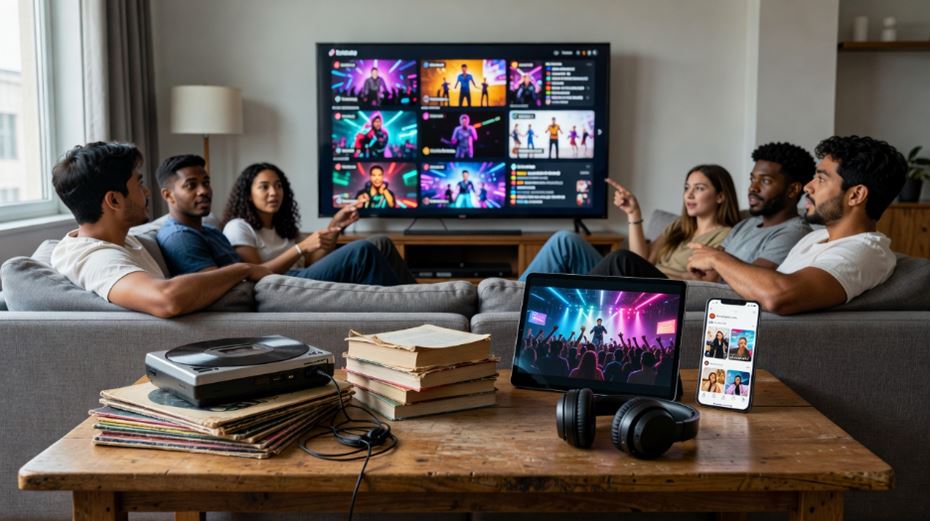
Do you remember when television dictated the rhythm of family evenings? Viewers checked printed TV guides and sat down at exact broadcast times or missed the show entirely. Prime-time slots ruled popular culture. A household chose one program and gathered around a single screen, turning viewing into a shared social ritual.
Cinema required physical trips to theaters with tickets bought in person. Release windows followed strict calendars set by studios. Music lived on vinyl records, cassette tapes, or CDs that people bought from stores and stored on shelves. Radio offered live broadcasts but no pause or rewind buttons.
Choice remained severely limited. A city with three television channels gave residents three options at any moment. Discovery depended on word-of-mouth, newspaper reviews, or chance encounters. Consumption stayed passive. Audiences absorbed whatever distributors decided to release. This scarcity created shared cultural moments yet left little room for individual tastes. The contrast with 2026 feels stark. Today one person can watch a documentary, stream a concert, and scroll short videos simultaneously on separate devices.
The Streaming Revolution and On-Demand Culture
Netflix launched its streaming service in 2007 and triggered a fundamental change. YouTube, Disney+, and Spotify followed, each removing the need to wait for scheduled programming. Cord-cutting accelerated. Households canceled cable subscriptions in favor of flexible monthly plans. By 2026 the global OTT and streaming market surpassed 200 billion dollars and continues expanding at double-digit rates.
Binge-watching became the new normal. Viewers consumed entire seasons in single weekends instead of waiting week by week. Production studios adapted by releasing full seasons at once and commissioning data-driven series. Algorithms tracked completion rates and viewing duration to greenlight future projects.
Convenience and selection became decisive competitive edges. Subscribers switched services easily when catalogs failed to satisfy. Traditional broadcasters lost tens of millions of subscribers during the past decade, especially in the United States. The pandemic years 2020–2021 accelerated adoption, lifting digital entertainment consumption by 40–60 percent worldwide and compressing years of behavioral change into months.
Social Media as the New Entertainment Powerhouse
Short-form video redefined daily entertainment. TikTok, Instagram Reels, and YouTube Shorts now command more than 2.5 hours of average user attention every day. The creator economy crossed 250 billion dollars in value as ordinary people gained direct access to global audiences.
Professional studios once controlled distribution. Today users film, edit, and publish from their phones. A clever hook combined with trending audio can push content to millions within hours. The mechanism of virality replaced traditional gatekeepers. Discovery happens through For You feeds rather than curated television lineups or critic recommendations.
Attention spans shortened. Content optimized for six-to-fifteen-second loops trained viewers to swipe quickly. Yet the same format elevated previously unknown talents into mainstream stars. Dancers, comedians, educators, and musicians built careers without agents or label deals. Social media inverted the entertainment pyramid. The audience became both consumer and primary producer.
Impact on Traditional Industries and Emerging Challenges
Cinema chains faced declining attendance as viewers preferred home screens with superior sound systems and no travel. Many studios shortened theatrical windows or released titles simultaneously across channels. The music industry watched physical sales collapse while streaming royalties created new revenue battles. Live events adapted through hybrid models yet struggled with high production costs.
Linear television suffered the sharpest losses. Cable providers reported steady subscriber declines throughout the decade. Advertising dollars migrated to platforms that offer precise targeting and measurable engagement.
Challenges multiplied alongside opportunities. Digital burnout affects users who consume several hours of short videos daily. Shortened attention spans complicate storytelling that requires sustained focus. Content oversupply makes discovery harder even with advanced algorithms. Monetization remains unstable for many independent creators. Copyright disputes intensified as user-generated material remixes existing works at unprecedented scale. Quality varies wildly when barriers to publication approach zero.
The Future of Entertainment in the Digital Age
VR and AR will deepen immersion. Headsets already transport users into virtual concerts and interactive films. Generative AI will allow viewers to influence storylines in real time or create custom characters and soundtracks. Metaverses promise persistent worlds where entertainment merges with social interaction and commerce.
These technologies raise ethical questions around data privacy, addiction mechanisms, and the authenticity of AI-created art. Creators must learn to collaborate with algorithms rather than compete against them. Consumers will need new digital literacy skills to navigate personalized feeds without losing serendipity.
The trajectory points toward even greater individual control. Entertainment will feel less like something received and more like something co-created. Those who adapt — whether by refining recommendation systems, protecting creative rights, or designing healthier consumption habits — will define the next decade of cultural experience. The screen no longer sits at the center of the living room. It travels with us, learns from us, and reshapes itself around our evolving preferences.
Adults Only 18++
This website contains adult content intended exclusively for individuals who are at least 18 years old. By entering, you confirm that accessing adult content is legal in your location.